In the highly competitive world of professional pickleball, every point matters, and strategy dictates success. As you just witnessed in the thrilling 5.0 championship pickleball match above, where a $500 prize was on the line, the margins for error are razor-thin. At this elite level, victory hinges not merely on raw talent but on intricate game plans, nuanced communication, and a steely mental game. Even top-tier players like Scott and TJ Stansbury, facing formidable opponents Gorka and Luke from Nebraska, discover new challenges and invaluable lessons during high-stakes play. This analysis delves deeper into the strategic nuances, mental fortitude, and tactical adjustments required to excel in 5.0 competitive pickleball.
Pre-Match Scouting and Dynamic Strategy in 5.0 Pickleball
Entering any 5.0 championship pickleball match without a preliminary strategy is akin to navigating a labyrinth blindfolded. Scott and TJ, for instance, had a distinct advantage having previously faced Gorka in a tournament. They recognized his “hot paddle” and solid play, which informed their initial approach. However, Luke remained an unknown variable, described as “super solid” and “steady.” This dynamic opposition necessitates an adaptable game plan.
Their initial strategy involved attacking Luke, aiming to uncover weaknesses through persistent pressure. Imagine if they had focused solely on Gorka; Luke might have capitalized on that oversight. The game’s early stages become a reconnaissance mission, where each dink and drive probes for vulnerabilities. Coaches often emphasize this exploratory phase. Adjusting in real-time is crucial when facing unfamiliar high-caliber competition.
The Art of the Dink: Patience and Pressure
At the 5.0 championship pickleball level, the dink game transforms into a sophisticated battle of attrition. It’s not just about placing soft shots; it’s about precision, intent, and creating advantageous pop-ups. Scott noted that their opponents, Gorka and Luke, were “absolutely up to the task” in the dink exchanges, giving away “really nothing to attack.” This highlights the importance of superior dinking technique and mental resilience.
Players must execute dinks with purpose, working opponents around the kitchen and forcing them into uncomfortable positions. Scott and TJ’s strategy initially focused on out-dinking their rivals to generate those crucial pop-up opportunities. However, when this primary strategy faltered, a tactical pivot became essential. Failing to adjust means relinquishing control, a common pitfall even for seasoned players.
Speed-Ups and the Second Ball Imperative
Aggressive speed-ups are powerful weapons in competitive pickleball, but they demand immediate follow-through. Scott reflected on a critical point where his speed-up was effective, yet he “was not ready for the ball to come back.” This often proves decisive in high-level exchanges.
Launching a speed-up signifies an attack, not a mere shot. Therefore, positioning for the next shot, known as the “second ball,” becomes paramount. Elite players anticipate the return, shifting their weight and paddle to maintain an offensive advantage. Neglecting this readiness can convert a potential winner into an unforced error, shifting momentum drastically.
Mastering Partner Communication and Court Coverage
Effective partner communication forms the bedrock of successful doubles play, particularly in 5.0 championship pickleball. The video showcased instances of both fluid teamwork and critical miscommunications. One point saw Scott and TJ unsure who would cover a middle ball, resulting in no one hitting it—a costly mistake.
Moreover, tactical positioning, such as placing a right-handed player on the left side to cover a partner’s backhand, can unlock new attacking angles. Scott expressed regret for not putting himself on the left more often, allowing TJ’s unique “craftiness” to shine against Luke. Consistent verbal and non-verbal cues, especially during transition zones and rapid-fire hands battles, prevent such lapses and secure crucial points.
Navigating the Left-Handed Opponent Dynamic
Playing against a left-handed opponent fundamentally alters court strategy. Jake highlighted that the opponent’s forehand often occupies the middle of the court, typically a prime attacking zone for right-handed teams. Scott confirmed this, noting that both he and TJ love attacking up the middle.
With a lefty like Gorka, whose powerful forehand effectively creates a “no-fly zone,” teams must adapt. This means redirecting attacks to the opponent’s backhand, or exploiting transitions with more acute angles. Understanding these handedness dynamics before the match provides a significant strategic edge, turning a perceived disadvantage into an opportunity for exploitation.
The Mental Game Under Championship Pressure
The mental aspect of 5.0 championship pickleball cannot be overstated. Scott admitted to experiencing “the world’s worst cotton mouth” from nerves early in the match, a relatable symptom of intense pressure. Remaining composed and resilient, especially when facing deficits like being “down 2-4,” is critical for any team.
The final moments of Game 1, where the score reached 10-10, illustrate the immense psychological burden. A miscommunication at game point, a “brain fart” as Scott called it, handed their opponents the lead. In these high-pressure scenarios, mental fortitude and unwavering focus separate champions from contenders. Learning to “forget game one, put it in the past” and reset for the next game is an advanced mental skill.
Insights into Paddle Technology and Rule Application
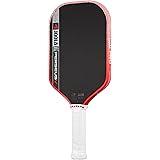
The video also provided glimpses into the equipment side of 5.0 competitive pickleball. Scott played with a “prototype Friday paddle,” a “power paddle” currently undergoing months of testing and set for release in a “couple months.” This reveals the ongoing innovation in paddle technology, with players seeking marginal gains in power and control.
Furthermore, Scott mentioned Gorka’s “illegal paddle” in July, hinting at the evolving regulations in competitive play. The “money ball” rule, allowing players to poll the crowd on line calls, adds a unique “gladiator situation” element to these high-stakes matches. This unique rule, used at 10-10-1 to tie the game, showcases how local rules can influence match dynamics and pressure.
Volleying for Answers: Your 5.0 Championship Pickleball Q&A
What kind of pickleball play is discussed in this article?
This article discusses high-level, competitive pickleball, specifically ‘5.0 championship’ matches. At this elite level, players rely on intricate game plans and mental fortitude.
Why is having a strategy important in competitive pickleball?
Having a strategy is crucial because it helps players plan their approach, adapt to different opponents, and uncover weaknesses. Without a game plan, it’s much harder to succeed in competitive matches.
What is ‘dinking’ in pickleball and why is it important?
Dinking involves hitting soft shots that land gently in the ‘kitchen’ area close to the net. It’s important because it requires precision and can create opportunities to force opponents into uncomfortable positions.
How important is communication with your partner in doubles pickleball?
Effective partner communication is extremely important and is the foundation of successful doubles play. It helps prevent mistakes and ensures both players are working together to cover the court and execute strategies.