Imagine a typical pickleball game, the sun shining, paddles clashing, and an intense rally unfolding. Suddenly, a crucial shot is hit near the kitchen line, and a player’s foot momentarily touches the no-volley zone. Confusion might arise, leading to a quick discussion or even a mild dispute among players. Understanding the official rules becomes paramount in such moments, ensuring fair play and a smooth game for everyone involved on the court.
The world of pickleball is continually evolving, and with the approach of a new year, it is essential to stay informed about the latest regulatory updates. The video above provides an excellent overview of the approved USAPA rule changes for 2025, which are officially slated to take effect on January 1st. While some adjustments may appear minor, knowing them thoroughly is crucial for adherence and accurate enforcement during your matches.
Understanding New Volley Rules and the No-Volley Zone
One of the most interesting revisions concerns the definition of a volley, particularly its interaction with the kitchen line, also known as the no-volley zone. Previously, a volley was understood to encompass the entire action, from the paddle’s swing to contact with the ball, and even the subsequent follow-through momentum. This comprehensive interpretation often created ambiguity, especially when a player’s foot placement was considered around the kitchen line.
However, the updated rule clarifies that the volley officially commences only upon contact with the ball. This specific change carries significant implications for foot faults near the kitchen line. For instance, a player who inadvertently touches the kitchen line before making contact with the ball, but then positions both feet behind the line before the actual strike, is now considered to have executed a legal volley. This adjustment simplifies the ruling process and focuses solely on the player’s foot position at the exact moment of ball contact.
It is important to remember that momentum still matters; therefore, touching the kitchen line immediately after hitting the volley remains a fault. Similarly, players are not permitted to be airborne, jumping out of the kitchen, while making contact with the ball. Both feet must be firmly planted on the ground behind the no-volley zone line at the time of impact for the volley to be deemed legal. This clarification helps to prevent unwarranted disagreements during fast-paced play near the net.
Fair Play in Pickleball Line Calls: Eliminating Spectator Influence
Another significant rule change addresses the influence of spectators on line calls, emphasizing the importance of personal judgment and integrity in the game. Imagine a scenario where a ball lands perilously close to the boundary line, leaving players momentarily unsure of its status. In the past, external opinions from onlookers or players from adjacent courts might have inadvertently swayed a player’s decision, leading to a call that was not entirely their own.
According to the new regulations, such external influence is now explicitly prohibited. A player is required to make a line call based solely on their own perception or that of their partner. This rule underscores the principle that calls should be made with absolute certainty, ensuring that decisions are always fair and impartial. It reinforces the spirit of sportsmanship, placing the responsibility of accurate judgment squarely on the shoulders of the players directly involved in the point.
This change is designed to maintain the integrity of the game, preventing any potential bias or confusion that might arise from unsolicited advice. Players are now encouraged to develop their own keen eye for line calls, fostering a more self-reliant and honest approach to scoring. Ultimately, the outcome of a point should be determined by the players on court, free from any outside interference.
Serving Changes for 2025: Paddle Toss and Verbal Cues
The serve, a fundamental aspect of pickleball, also sees a couple of notable modifications in the 2025 rules. One interesting addition is the allowance for players to toss the ball using their paddle, rather than exclusively with their hand. This might be particularly beneficial for players with physical limitations, such as those with only one arm, offering them an alternative method to initiate the serve. However, a crucial caveat accompanies this flexibility.
Regardless of whether the ball is tossed by hand or paddle, the rule explicitly states that no spin may be imparted on the ball during the toss. This regulation applies equally to both standard serves and drop serves, maintaining consistency and preventing any unfair advantage that might be gained from pre-spinning the ball. For most players, continuing to toss the ball with their hand is likely the most practical and comfortable approach.
Furthermore, a rule regarding player readiness during the serve has been refined, promoting better etiquette and preventing “quick serves.” Previously, a verbal indicator from the receiving player that they were not ready might have been ignored by the server. Under the new rules, if a player verbally states “Wait!” after the score has been called, the server is legally obligated to pause and allow the opponent to get into position. Failure to do so would result in the point being replayed.
This clarification provides players with a legitimate mechanism to ensure they are adequately prepared before a serve is initiated. It reinforces the existing understanding of good sportsmanship, where quick serving is generally considered unfair. An alternative, non-verbal signal, such as raising a hand, can also be employed to communicate unreadiness, mirroring practices seen in other racquet sports.
Paddle Regulations: Promoting Fair Competition
The regulations surrounding pickleball paddles are receiving heightened scrutiny, driven by a desire to preserve the sport’s strategic depth and appeal. A core principle guiding these updates is the prevention of any single paddle design from dominating the game, potentially altering its fundamental nature. Specifically, concerns have been raised about paddles that possess excessive power, which could inadvertently diminish the importance of finesse shots like dinks and drops, shifting the game towards an overly aggressive, power-centric style.
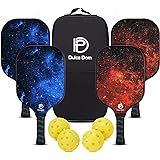
A broad consensus has emerged among players and governing bodies, advocating for measures that ensure no paddle grants an unfair advantage. To this end, various regulations and approval processes are in place for paddles. For players, the most critical takeaway is to exclusively use paddles that are officially approved by the USAPA. These approved paddles feature a distinct seal, usually located at the bottom, signifying compliance with established standards.
Utilizing a non-approved paddle risks participating with equipment that might exceed permissible performance thresholds, thereby creating an uneven playing field. While investing in a high-quality, legal paddle that suits your game is always recommended, winning should ideally be attributed to skill and strategy, rather than solely to a technologically superior piece of equipment. For example, our Sweet Spot Pro paddle, available during our Black Friday sale for $80 using code “FRIDAY,” embodies these standards. It is a Gen 2 thermoformed paddle featuring a T700 carbon fiber face and exceptional grit, components typically found in paddles costing upwards of $150 or even $200, representing excellent value for a USAPA-compliant, performance-enhancing product.
Foot Fault Disputes and Partner Fault Calling: Team Responsibility
Disputes over foot faults, whether at the kitchen line or during a serve, are now addressed with a clearer framework regarding team agreement. If one player believes an opponent has committed a foot fault, but the opponent disagrees, the ruling ultimately depends on both members of the calling team agreeing on the fault. Specifically, the entire team must concur that a foot fault occurred to successfully request a replay of the point.
Furthermore, this rule stipulates that if there is any disagreement between partners on either side regarding a perceived foot fault, the benefit of the doubt automatically goes to the opposing team. This means that if a player thinks their opponent foot faulted but their partner does not, the point will be awarded to the team that supposedly committed the fault. This ensures that calls are made with strong certainty and eliminates disputes arising from a single player’s unconfirmed observation.
Expanding upon the principle of self-officiating, an amendment has been made to the rule requiring players to call faults on themselves. This responsibility now extends to one’s partner as well. If a player observes their partner committing a fault—be it a kitchen foot fault, a serve foot fault, or a double bounce—they are legally obligated to acknowledge it to the opposing team. This promotes a higher level of ethical conduct and accountability within a team.
This rule applies to all types of faults that would typically result in the other team gaining the point. It reinforces the expectation that fairness should always take precedence, and that both partners share the responsibility for upholding the integrity of the game. Such a measure ensures that play remains equitable and transparent, fostering a more trustworthy environment on the pickleball court.
Serving Up Answers: Your 2025 Pickleball Rules Q&A
What are the new pickleball rules for 2025 about?
The new rules are updates approved by USAPA that take effect on January 1st, 2025. They cover important areas like volleys, serves, line calls, and paddle regulations to ensure fair play.
What is the ‘kitchen line’ and how does it affect hitting the ball?
The ‘kitchen line’ is also called the no-volley zone, and you cannot hit the ball out of the air (volley) while standing in or touching this zone. Your feet must be behind this line at the exact moment your paddle contacts the ball.
Can I get help from spectators for line calls?
No, according to the new rules, players must make line calls based only on their own observation or their partner’s. Outside opinions from spectators or other courts are not allowed.
Can I use my paddle to toss the ball when serving?
Yes, you can now use your paddle to toss the ball for a serve, but you cannot put any spin on the ball during the toss. Most players will still find tossing by hand easier.
What should I do if my partner commits a fault during a game?
If you see your partner commit a fault, like touching the kitchen line or serving incorrectly, you are now legally required to acknowledge it to the opposing team. Both partners share responsibility for fair play.