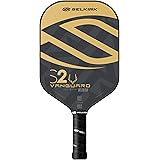
Have you ever considered how a minor adjustment to your pickleball paddle could significantly elevate your game? As briefly introduced in the accompanying video, the judicious application of weighted tape, such as lead or tungsten, is a sophisticated technique employed by many elite pickleball players to fine-tune their equipment.
This method of pickleball paddle customization is not merely about adding mass; it involves a nuanced understanding of paddle dynamics. The aim is often to enhance specific performance characteristics, which can provide a distinct competitive advantage on the court.
The Physics of a Weighted Pickleball Paddle
Understanding the fundamental principles behind paddle weighting is crucial for effective customization. When mass is added to a pickleball paddle, its physical properties are altered, directly impacting how it interacts with the ball and the player’s arm.
Moment of Inertia and Swing Weight
One of the primary concepts in paddle weighting is the moment of inertia, which dictates how resistant an object is to changes in its rotational motion. When weight is distributed towards the paddle’s perimeter, the moment of inertia is increased, which consequently raises the swing weight.
A higher swing weight generally translates to more power being generated during a stroke. This occurs because the paddle, once in motion, possesses greater momentum, allowing for a more forceful impact with the ball. Furthermore, an increased moment of inertia contributes to enhanced paddle stability, particularly on off-center hits.
Sweet Spot Expansion and Vibration Dampening
The sweet spot on a pickleball paddle is the area where the ball can be struck with maximum efficiency and minimal vibration. Strategic weighting can effectively enlarge this sweet spot.
By adding mass to the paddle’s edge, the effective area that produces a clean, powerful hit is expanded, decreasing the likelihood of a “dead” ball or loss of control on mishits. Moreover, the added mass can assist in dampening unwanted vibrations, leading to a more comfortable feel and potentially reducing arm fatigue during extended play.
Materials for Pickleball Paddle Customization
The video briefly mentions lead tape and tungsten tape as viable options for paddle weighting. Each material possesses distinct characteristics that may influence a player’s choice.
Lead Tape: The Traditional Choice
Lead tape has historically been the go-to material for racquet and paddle customization due to its high density and malleability. It is easily cut and applied, conforming well to the contours of the paddle frame.
However, it is important to note that lead is a toxic substance. Proper handling and covering with electrical tape, as suggested in the video, are imperative to prevent skin contact and environmental contamination.
Tungsten Tape: A Modern Alternative
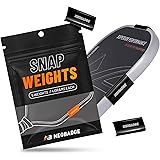
Tungsten tape, often seen as a premium alternative, offers similar density to lead but is non-toxic. Brands such as Selkirk produce specialized tungsten tape for this purpose.
For players concerned about the environmental or health implications of lead, tungsten tape presents an excellent, safe option. Its application process is comparable, providing the same benefits of increased mass and improved paddle dynamics.
Strategic Weight Placement and Its Effects
The location where weight is added to a pickleball paddle profoundly impacts its performance characteristics. This is not a one-size-fits-all approach; rather, it is a highly personalized process that requires experimentation.
Increasing Power and Stability
To maximize power, weight is often applied to the perimeter of the paddle head, particularly towards the tip. Imagine if additional mass were placed along the top edge; the resulting increase in swing weight would allow for more penetrating drives and volleys.
This placement also significantly enhances stability, meaning the paddle is less likely to twist on off-center hits. Consequently, a higher percentage of shots can be executed with precision, even when contact is not perfectly centered.
Enhancing Sweet Spot and Control
Weight added to the sides of the pickleball paddle, as mentioned in the video, is a common strategy to expand the sweet spot laterally. This broader sweet spot ensures more consistent contact across a wider area of the paddle face.
For players seeking a blend of power and control, a balanced distribution of weight along the sides can be highly effective. It allows for solid groundstrokes and volleys without making the paddle feel overly sluggish.
Modifying Balance Point
The balance point of a paddle refers to where its weight is evenly distributed. By adding weight to the handle area (below the grip), the paddle’s balance point is shifted closer to the hand, making it feel lighter and more maneuverable.
Conversely, weighting the head shifts the balance point further away, making the paddle feel head-heavy and more powerful, albeit potentially slower to react. The ideal balance point is subjective and dependent on a player’s style and preferences.
The Iterative Process of Pickleball Paddle Customization
Effective paddle weighting is a process of systematic trial and error. It is strongly advised that adjustments be made incrementally, perhaps adding only a few grams at a time.
After each modification, the paddle should be tested thoroughly in various game scenarios. Careful attention should be paid to how the paddle feels during swings, the power generated, the control exerted, and the impact on arm comfort.
Documenting Changes for Optimized Performance
A methodical approach involves documenting the amount of weight added, its precise location, and the perceived effects on play. This record-keeping facilitates a more efficient refinement process, allowing for precise adjustments and reproducibility.
Imagine if a player meticulously tracks different configurations; such data would significantly aid in identifying the optimal setup for their unique playing style. This systematic experimentation is a hallmark of elite-level equipment management.
Addressing Potential Risks: Pickleball Elbow and Over-Weighting
While pickleball paddle customization offers significant advantages, it is imperative to proceed with caution. The video rightly highlights the risk of “pickleball elbow,” a form of epicondylitis often exacerbated by improper technique or equipment.
Preventing Over-Weighting
Applying too much weight to a paddle can result in it becoming excessively heavy and slow, as cautioned in the video. An overly heavy paddle can lead to increased strain on the arm, shoulder, and elbow, potentially contributing to injuries such as pickleball elbow or tennis elbow.
It is generally recommended to start with minimal additions (e.g., 1-2 grams) and gradually increase as needed, always prioritizing comfort and injury prevention over raw power. The paddle should still feel controllable and responsive during quick exchanges.
Ergonomics and Technique
Beyond weighting, proper technique and ergonomic considerations are vital. Players experiencing discomfort should consult with a coach or physical therapist to assess their stroke mechanics and ensure their grip and paddle size are appropriate.
The goal of pickleball paddle customization is to complement a player’s natural game, not to compensate for fundamental technical deficiencies. When approached thoughtfully, custom weighting can unlock new levels of performance for any serious pickleball enthusiast.
Unlock Your Paddle’s Power: Your Questions Answered
What is weighted tape for a pickleball paddle?
Weighted tape, such as lead or tungsten, is a material applied to a pickleball paddle to customize its balance and feel. It’s a technique used by players to fine-tune their equipment for better performance.
Why would someone add weight to their pickleball paddle?
Adding weight can increase the paddle’s power and stability, especially on hits that aren’t perfectly centered. It can also expand the paddle’s ‘sweet spot,’ making it easier to hit the ball cleanly.
What materials are used for adding weight to a pickleball paddle?
Common materials include lead tape, which is a traditional choice, and tungsten tape, a modern non-toxic alternative. Both are dense and can be easily applied to the paddle frame.
Where should I add weight to my pickleball paddle?
Weighting the paddle’s perimeter (like the top edge) increases power and stability, while adding weight to the sides can enhance the sweet spot and control. Placing weight near the handle makes the paddle feel lighter and more maneuverable.