So, you’ve watched the video above and are ready to jump into the exciting world of pickleball. It’s a game that has captured the hearts of millions, blending elements of tennis, badminton, and ping-pong into a dynamic, social, and incredibly fun experience. While the video offers an excellent visual walkthrough of the fundamentals, mastering pickleball basics often requires a deeper dive into the nuances of its rules, equipment, and strategic play. This comprehensive guide builds upon that foundation, ensuring you step onto the court with confidence and a clear understanding of how to play pickleball effectively.
Many new players feel overwhelmed by seemingly complex scoring systems or unique court rules like the “kitchen.” However, by breaking down these elements and providing additional context, we can demystify the game. This article will serve as your ultimate written resource, complementing the video with expanded explanations, practical tips, and strategic insights designed to accelerate your learning curve and enhance your enjoyment of pickleball.
Understanding Pickleball Equipment for Beginners
Starting any new sport often involves an initial investment in gear, and pickleball is no exception. However, one of the significant advantages of pickleball is its relatively minimal equipment requirements. You primarily need a paddle, a ball, and appropriate footwear to get started, along with access to a court.
Choosing Your First Pickleball Paddle
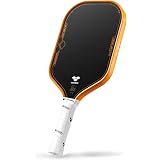
The paddle is arguably your most important piece of equipment. While the video wisely advises against heavy wooden paddles, which can quickly feel cumbersome and limit your play, it’s worth exploring composite paddles further. These modern paddles, typically ranging from $50 to $100 for beginners, offer a superb balance of power and control without breaking the bank. Unlike a wooden plank, a composite paddle acts more like a spring, helping you generate pace and spin with less effort.
Consider borrowing a paddle first to get a feel for different weights and grips. Many local pickleball communities or venues provide paddles for newcomers, offering a perfect trial run. Should you decide to purchase, remember the recommendation to check reputable sites like Pickleball Central, which often provides a 30-day testing period. This generous policy ensures you aren’t stuck with a paddle that doesn’t feel right in your hand, allowing you to return it even after a few games – a significant benefit for new players.
Selecting the Right Pickleball
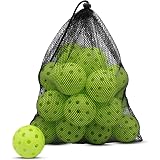
Just like golf balls or tennis balls, pickleballs come in different varieties designed for specific playing conditions. The video highlights two main types: harder “outdoor” balls and softer, “rubberier” “indoor” balls. While the court surface indeed dictates the best ball choice, understanding their physical properties can deepen your appreciation.
Outdoor pickleballs, often brightly colored and featuring smaller, more numerous holes, are engineered for durability against rougher surfaces and greater wind resistance. Conversely, indoor pickleballs are slightly softer, have fewer but larger holes, and are designed to provide a more consistent bounce on smooth gym floors. Always carry a few extra balls to the court, as they can crack during intense play, similar to how a light bulb might unexpectedly burn out after continuous use.
Footwear and Attire Essentials
Proper footwear is paramount for preventing injuries in any sport involving lateral movement. Running shoes, while comfortable for forward motion, are a poor choice for pickleball because they lack the necessary side-to-side support. Wearing them on a pickleball court is akin to trying to drive a race car with bicycle tires – you simply won’t have the stability needed for quick directional changes.
Instead, opt for tennis shoes for hard outdoor courts or basketball/volleyball shoes for indoor surfaces. These shoes are specifically designed to support the ankle and provide traction during rapid lateral shifts, pivots, and stops, which are fundamental to pickleball play. Beyond shoes, wear comfortable athletic clothing that allows for a full range of motion. Don’t forget essentials like water for hydration, and if playing outdoors, a hat and sunscreen for protection against the elements.
Mastering Pickleball Court Layout and Key Rules
A pickleball court, roughly the size of a badminton court, holds the secrets to the game’s unique charm. Unlike a chessboard where every piece has a predetermined path, pickleball players navigate dynamic zones, each with distinct rules that shape gameplay. Grasping these territorial boundaries and regulations is essential for anyone learning how to play pickleball.
The Court and Its Lines: Your Playing Field
The standard pickleball court is 20 feet wide by 44 feet long, divided by a net. Every line on the court is considered “in bounds,” a crucial distinction for shots landing close to the edges. The major boundary lines are the baseline at the back and the sidelines along the sides. Within each half of the court, a centerline divides the service areas, while the non-volley zone line creates the distinctive “kitchen” area.
Hitting the ball out of bounds or into the net results in a fault, ending the point. This concept is straightforward: imagine trying to paint a picture and accidentally splattering paint outside the canvas – it’s an error that costs you the point. The aim is always to clear the net and keep the ball within the painted boundaries.
The Non-Volley Zone: Pickleball’s Unique “Kitchen”
Perhaps the most distinctive and strategically important area on a pickleball court is the non-volley zone, often affectionately called “the kitchen.” This 7-foot area on each side of the net, extending from the net back to the non-volley zone line, fundamentally shapes how rallies unfold. Its primary rule is simple yet profound: you cannot volley the ball (hit it out of the air before it bounces) while standing in or on the non-volley zone line.
This rule is brilliant because it prevents players from simply rushing the net and smashing every shot downwards, which would make for short, unengaging points. Instead, it encourages softer, more strategic shots, longer rallies, and promotes the “dink” game, where players delicately drop the ball into the kitchen, forcing opponents to hit up. It’s like a defensive barrier, requiring players to step back and let the ball bounce before advancing. Understanding this rule is key to effective pickleball strategy; violating it, even by stepping into the kitchen due to momentum after a volley, is a fault, similar to overstepping your boundary in a negotiation.
The Two-Bounce Rule: Setting the Pace
Another foundational pickleball rule, vital for beginners, is the two-bounce rule (sometimes called the double-bounce rule). This states that the serve must bounce once on the receiving team’s side, and the return of that serve must also bounce once on the serving team’s side before it can be hit. After these initial two bounces, players can then choose to volley the ball or let it bounce once before hitting it.
This rule effectively slows down the start of each point, preventing aggressive net play right away and allowing both teams to transition from the baseline to the non-volley zone line. It acts like a speed bump at the beginning of a race, ensuring neither team gets an unfair immediate advantage. Overlooking this rule is a common mistake for new players, leading to many lost points.
Effective Pickleball Strategy and Positioning
Winning in pickleball isn’t just about hitting the ball hard; it’s about smart positioning and consistent play. The strategic objective, as elegantly put in the video, is to get one more ball back over the net and in play than your opponents. This often leads to fascinating exchanges where finesse triumphs over raw power, creating opportunities for rallies that feel like a chess match on a smaller scale.
Why the Non-Volley Zone Line is Your Best Friend
For doubles play, the single most advantageous position on the court is at the non-volley zone line. From here, you and your partner can hit powerful, downward shots and minimize the angles available for your opponents to exploit. It’s like being at the commander’s desk, having the best overview and control of the battlefield. The closer you are to the net (legally, of course), the less distance the ball has to travel, giving your opponents less time to react and less room to place their shots.
While many points, especially for beginners, may conclude before players reach the kitchen line, actively striving to get there is crucial for long-term improvement. Many former tennis players, accustomed to groundstrokes from the baseline, might initially gravitate towards staying further back. However, the unique physics and geometry of pickleball unequivocally favor controlling the non-volley zone line, turning good players into great ones. Think of it as controlling the center in chess; it dictates the flow of the game.
Understanding Starting Positions and Transitions
Every point in pickleball begins with specific player positions. For the serving team, both players start behind the baseline due to the two-bounce rule. This ensures the server makes a legal serve and their partner avoids an illegal volley on the return. Conversely, the receiving team positions their returner behind the baseline, ready to field the serve, while their partner strategically stands at the non-volley zone line, poised to put pressure on the serving team after the return bounce.
The goal after the initial two bounces is for both teams to advance to their respective non-volley zone lines. This transition often involves a series of “dink” shots or softer drops designed to allow players to move forward safely. Mastering this transition is a cornerstone of advanced pickleball play, transforming chaotic rallies into organized offensive and defensive maneuvers.
Pickleball Scoring Made Simple: The Three-Number System
Scoring in pickleball often presents the biggest hurdle for newcomers. However, once you grasp the underlying logic, it becomes surprisingly intuitive. Forget complicated fractions or sudden death rules; pickleball uses a three-number system called out by the server before each point, acting as a clear status report for everyone on the court.
Deciphering the Score: Serving Team, Receiving Team, and Server Number
The server announces three numbers:
- **Your Team’s Score:** The points accumulated by the serving team.
- **Opponent’s Score:** The points accumulated by the receiving team.
- **Server Number:** A 1 or 2, indicating whether the current server is the first or second player on their team to serve during that service turn.
The Dance of Side-Outs and Switching
A “side-out” is the term for when the serving team loses both of its service opportunities (or just one in the unique first-server exception) and the serve passes to the other team. When the serving team scores a point, they switch sides of the court, and the same player continues to serve. If they lose a point, they do not switch sides; instead, the serve passes to their partner (if it’s the first server), or it becomes a side-out if it was the second server.
This continuous switching and passing of the serve can feel like a complex square dance at first. However, its purpose is to ensure both players on a team get serving opportunities and to make the game dynamic. The returning team, by contrast, does not switch sides regardless of who wins the point. They only adjust their court position based on who is receiving the serve.
The First Server Exception Rule: Balancing the Game
To prevent one dominant team from running away with the game too quickly, pickleball includes a “first server exception” rule at the very start of the match. For the team that serves first in the game, only one player (the one on the right side) gets to serve. Once they lose a point, a side-out occurs immediately, and the serve goes to the opposing team.
This rule ensures that the returning team gets an early chance to serve and score. It’s why the very first score called out in a game is “0-0-2.” This might seem counter-intuitive, but it signifies that the “first” server for that team has been effectively skipped for that initial service turn, and the game begins as if the second server were serving. From then on, both players on a team will get their turn to serve after each side-out, making for a fair and exciting competition.
Key Serve Rules: The Art of Starting a Point
The serve is a unique shot in pickleball, governed by specific rules designed to limit power and promote rally play. Unlike tennis, where a powerful overhand serve is common, pickleball serves emphasize control and consistency over brute force. Adhering to these rules is fundamental to a legal serve and to initiating a successful point.
Footwork and Baseline Adherence
When serving, both of your feet must remain behind the baseline. You cannot step on or over the baseline until after you have made contact with the ball. This rule, while seemingly simple, ensures a fair distance for the serve and prevents players from gaining an unfair advantage by creeping closer to the net. It’s like a starting line in a race; you must begin behind it.
The serve must also land diagonally into the opponent’s service court, clearing the non-volley zone. Should it land in the kitchen or outside the designated service box, it’s a fault. Mastering this precision is a core skill for any pickleball player.
Volley Serve vs. Drop Serve: Your Options
Pickleball offers two primary ways to serve: the volley serve and the drop serve. Each has its own set of rules and strategic implications. Many players gravitate towards the volley serve, which allows for a higher contact point and potentially a more aggressive serve. However, for new players, the drop serve can be a fantastic entry point.
With a **volley serve**, you toss the ball and hit it out of the air. Crucially, your hitting arm must move in an upward arc, your paddle head cannot be above your wrist at contact, and the contact point with the ball must be below your waist (generally accepted as your navel). These strictures are designed to prevent an overpowering serve. The **drop serve**, however, offers more flexibility. You simply release the ball and let it bounce once (or multiple times, though one bounce is recommended) before striking it. The key here is a simple release, without any upward or downward propulsion, giving new players more time to time their swing and focus on consistency.
While the volley serve can generate more pace and a more effective angle due to a higher contact point, routine consistency is often more valuable for beginners. Experiment with both serve types to discover what feels most natural and allows you to reliably get the ball in play. Remember, a perfectly placed, softer serve that lands in bounds is always more effective than a powerful serve that goes out or hits the net.
Ready to Rally? Your Pickleball Questions Answered
What is pickleball?
Pickleball is a dynamic and fun sport that combines elements of tennis, badminton, and ping-pong. It’s played on a smaller court using paddles and a plastic ball.
What basic equipment do I need to play pickleball?
To get started with pickleball, you primarily need a paddle, a pickleball, and appropriate footwear like tennis or court shoes. You will also need access to a pickleball court.
What is the ‘kitchen’ in pickleball?
The ‘kitchen’ is another name for the non-volley zone, a 7-foot area on each side of the net. Players cannot hit the ball out of the air (volley) while standing in or on this zone.
What is the two-bounce rule in pickleball?
The two-bounce rule requires that the serve must bounce once on the receiving team’s side, and the return of that serve must also bounce once on the serving team’s side before players can hit the ball out of the air. This rule prevents aggressive net play at the start of a point.
How do you score in pickleball?
Pickleball scoring uses a three-number system announced by the server: your team’s score, the opponent’s score, and the server number (1 or 2). Only the serving team can score points, and games are usually played to 11, winning by at least two points.