The burgeoning popularity of pickleball underscores the critical importance of selecting the right equipment. A high-performance pickleball paddle is not merely an accessory; it is an extension of a player’s skill set, directly influencing shot accuracy, power generation, and overall court dominance. As highlighted in the accompanying video, discerning the technical nuances of various paddles can profoundly impact one’s game, transitioning recreational play into a more competitive and enjoyable experience.
The market offers a diverse array of pickleball paddles, each engineered with specific player profiles and playing styles in mind. From core materials to grip ergonomics, every design element contributes to the paddle’s performance characteristics. Understanding these intricate details is paramount for players seeking to optimize their equipment choices and elevate their gameplay, especially as they progress from beginner to intermediate levels.
Deconstructing Core Technologies in Pickleball Paddles
The core of a pickleball paddle is its foundational component, dictating much of its feel, power, and control. Two primary core types, explicitly mentioned with paddles like the Niupipo and Onix Z5, offer distinct advantages for players.
Honeycomb Core Innovation
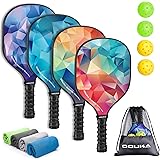
The Niupipo pickleball paddle features a professional honeycomb core design, a technology prevalent across many high-performance paddles. This internal structure, often made from polypropylene or aluminum, provides an exceptional strength-to-weight ratio.
The hexagonal cells absorb impact efficiently, distributing the force evenly across the paddle face. This design trait is crucial for achieving the “perfect balance and great control and power” attributed to the Niupipo model, offering a consistent feel on contact. Research consistently demonstrates that honeycomb cores deliver a larger sweet spot and superior vibration dampening, reducing fatigue and enhancing touch play.
Nomex Core Dynamics
The Onix Z5 pickleball paddle, celebrated as a flagship product, incorporates a Nomex core. This material, a aramid fiber, is known for its incredible stiffness and durability, making it one of the original and most robust paddle core materials.
While Nomex cores tend to be louder on impact compared to polypropylene, their rigid construction translates into explosive power. This stiffness is instrumental in the Z5’s ability to “balance power with excellent control,” particularly for precise shots like dinks right at the net, where touch and feel are paramount. Its dense structure provides excellent feedback, allowing advanced players to feel the ball more acutely.
Surface Materials: Graphite vs. Composite
Beyond the core, the paddle’s surface material profoundly influences spin, durability, and overall feel. The Onix Z5 pickleball paddle is available in both graphite and composite options, offering players a choice based on their preferred playstyle.
Graphite Surfaces for Finesse and Touch
Graphite pickleball paddle surfaces are typically thinner and lighter, contributing to quicker paddle speed and enhanced responsiveness. The carbon graphite tapered edge on the Niupipo paddle, for instance, is noted for enhancing elasticity and maximizing shot balance.
This material provides a firm feel and excellent control, often favored by players who prioritize touch, spin, and precise shot placement. Data indicates that graphite surfaces are highly effective for players who utilize quick hands at the net and rely on finesse to win points.
Composite Surfaces for Power and Feel
Composite surfaces, often made from fiberglass or a blend of materials, tend to be slightly heavier and offer a softer, more forgiving feel. These surfaces typically generate more power and a greater “pop” off the paddle, making them suitable for players who prefer to drive the ball with force.
The textured nature of many composite surfaces can also aid in imparting spin on the ball. While perhaps sacrificing a minute degree of touch compared to pure graphite, composite paddles like certain variations of the Onix Z5 provide a robust option for players seeking a blend of power and control with a slightly softer impact.
Ergonomics and Playability: Grip, Weight, and Sweet Spot
The player-paddle interface—encompassing grip, weight, and the sweet spot—is critical for optimal performance and comfort. These factors directly influence player fatigue, shot consistency, and the ability to execute diverse shots.
Optimizing Your Grip for Control and Comfort
Grip size is a personal preference but has significant implications for control and injury prevention. The Niupipo paddle’s “specially designed four-and-a-half-size ergonomic grip” and the Onix Z5’s “four-and-a-quarter-inch grip with a five-inch handle” illustrate the precision in modern paddle design.
A grip that is too small requires excessive squeezing, leading to forearm fatigue and potential slippage. Conversely, a grip that is too large can hinder wrist snap for power and spin, making it difficult to manipulate the paddle quickly. Expert analysis suggests that the ideal grip allows for a slight gap when holding the paddle, preventing over-gripping and promoting relaxed control. Professional players often customize their grip by adding overgrips to achieve their precise preferred diameter.
Weight and Balance: Tailoring to Your Playstyle
Paddle weight is a critical determinant of power and maneuverability. The Onix Z5, with its graphite and composite options, weighs between “7.8 to 8.7 ounces.” This range represents a common sweet spot for intermediate players seeking a balance.
Lighter paddles (under 7.5 oz) offer rapid reaction times and greater maneuverability, ideal for quick volleys and strategic dinks. However, they may lack the inherent power for strong drives. Mid-weight paddles (7.5-8.5 oz) strike a versatile balance, providing a good mix of power and control. Heavier paddles (over 8.5 oz) generate significant power and stability but can reduce paddle speed and potentially lead to fatigue. The “desired stiffness and surprisingly lightweight” of the Niupipo paddle points to a design philosophy that balances these characteristics for enjoyable play without excessive strain.
The Generous Sweet Spot and Paddle Shape
The sweet spot refers to the optimal area on the paddle face where contact results in maximum power and control with minimal vibration. A “generous sweet spot,” as provided by the Onix Z5’s “wide body shape” and “eight-and-a-half-inch wide hitting surface,” significantly enhances a player’s consistency.
Wide body paddles typically offer a larger sweet spot, making them more forgiving on off-center hits. This design is particularly beneficial for players developing their technique, as it minimizes the penalty for imperfect contact. Conversely, elongated or blade-shaped paddles might have a smaller sweet spot but can offer extended reach and potentially greater power for skilled players who consistently hit the center. Choosing a paddle shape that complements one’s contact consistency is a key strategic decision.
Advanced Paddle Features and Performance Implications
Modern pickleball paddles integrate various advanced features that enhance performance, durability, and player experience. These often subtle elements collectively contribute to a paddle’s overall effectiveness on the court.
Edge Guard Durability and Protection
Most pickleball paddles feature an edge guard, a protective strip running along the perimeter of the paddle face. While not explicitly mentioned for the Niupipo or Onix Z5 in the video, its presence is almost universal in quality paddles.
The edge guard shields the paddle from ground scrapes and impacts, prolonging its lifespan. Its material and integration can also slightly influence the paddle’s balance and aerodynamic properties. A well-designed edge guard is critical for maintaining the structural integrity of the paddle, particularly for players who frequently dive for balls or play aggressively close to the ground.
Surface Texture and Spin Generation
Beyond material, the texture of a paddle’s surface plays a significant role in generating spin. Many contemporary paddles, including high-performance models, feature subtly textured or ‘rough’ surfaces designed to grip the pickleball more effectively.
This increased friction allows players to impart more topspin, backspin, or sidespin on their shots, adding another dimension to their game. Such surface treatments are carefully calibrated to adhere to USAPA regulations while maximizing spin potential. Players focused on aggressive serves, slice returns, and sharp dinks will find a textured surface invaluable for expanding their shot repertoire and controlling ball trajectory.
Choosing Your Ideal Pickleball Paddle
The process of selecting a pickleball paddle is a blend of understanding technical specifications and personal preference. Paddles like the Niupipo, with its focus on balance and control for beginner to intermediate players, and the Onix Z5, renowned for its wide body and blend of power and control for dinks, exemplify the thoughtful engineering in the market.
Players should consider their dominant playing style—whether they prioritize power, control, spin, or a balanced approach. Evaluating factors such as core material, surface composition, grip size, and paddle weight against individual strengths and weaknesses will lead to a more informed decision. Ultimately, the best pickleball paddle is the one that feels most comfortable, enhances your natural abilities, and helps you enjoy your time on the field.
Serving Up Answers: Your Pickleball Accessory Q&A
What are the two main parts of a pickleball paddle?
A pickleball paddle primarily consists of a core, which influences its feel and power, and a surface material, which affects spin and durability.
What are some common core materials found in pickleball paddles?
Common core materials include honeycomb (like polypropylene) for good balance and control, and Nomex, which is known for its stiffness and powerful shots.
How do different paddle surface materials affect gameplay?
Graphite surfaces are typically thinner, offering more touch and precise control, while composite surfaces are slightly heavier, providing more power and a softer feel.
Why is the grip size on a pickleball paddle important?
The grip size is crucial for both comfort and control, allowing you to manipulate the paddle effectively and preventing hand fatigue during play.
What is the ‘sweet spot’ on a pickleball paddle?
The sweet spot is the optimal area on the paddle face where hitting the ball results in the most power and control with the least vibration.