Embarking on a new athletic endeavor like pickleball presents an exciting challenge, but often, the initial hurdle lies in understanding what equipment is truly essential. Many aspiring players feel overwhelmed by the vast array of gear available, questioning which products offer the best value or performance without requiring an expert’s discernment. However, acquiring the right foundational pickleball equipment doesn’t have to be a complex ordeal. This guide, expanding upon the insights shared in the video above, aims to demystify the choices, ensuring you step onto the court well-prepared, safely, and ready to enjoy the game.
The solution involves a strategic approach to selecting your initial gear. By focusing on three critical components—the paddle, the ball, and court-specific footwear—new players can establish a solid foundation for their pickleball journey. Furthermore, understanding the nuances between beginner-friendly and advanced equipment, particularly concerning materials and construction, is paramount. Let us delve into how to make informed decisions for your inaugural pickleball experience, ensuring both enjoyment and safety from your very first serve.
Choosing Your First Pickleball Paddle: Quality vs. Cost
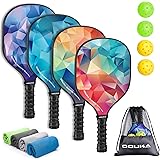
When you first consider buying a pickleball paddle, the sheer volume of options can be daunting. From varying shapes to a wide spectrum of prices, it is easy for a newcomer to feel lost. However, a crucial insight to grasp early on is that in the world of pickleball paddles, price generally correlates with material quality and durability rather than difficulty of use. Consequently, a higher price point typically signifies better construction and more advanced materials, not a paddle reserved only for seasoned pros.
For individuals just dipping their toes into the sport, investing in a paddle under the $100 mark is a highly recommended starting point. This range offers a wide selection of perfectly functional paddles suitable for learning the basics of the game. Imagine purchasing a $50 paddle, which, despite its lower cost, provides an excellent feel for the ball and allows you to develop fundamental strokes. Although it may not offer the same longevity or advanced features as a $250 counterpart, it serves its purpose admirably for the initial phase of play.
The significant difference between a $50 paddle and a $250 one often lies in the core materials and surface technologies. A more expensive paddle might feature a polymer honeycomb core for a larger sweet spot and superior vibration dampening, coupled with a carbon fiber or graphite face for enhanced power and spin. Conversely, a budget-friendly paddle might utilize a less advanced composite material, which, while still effective, may wear down quicker or offer less precise control. Nevertheless, for someone unsure about their long-term commitment, these entry-level options are invaluable for gaining experience and discovering personal preferences without a substantial financial outlay. Many players find that after using an initial paddle for a few months, they develop a clearer understanding of what qualities they desire in their next, potentially more advanced, model.
Selecting the Right Pickleball for Your Game
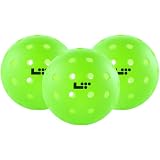
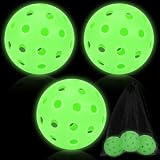
Beyond the paddle, the pickleball itself is an indispensable piece of equipment. Like paddles, pickleballs come in a variety of types, primarily categorized by their intended playing surface: indoor or outdoor. This distinction, as highlighted in the video, refers not to whether you are playing under a roof, but rather to the texture of the court surface. Understanding this difference is key to optimal play and ball longevity.
Outdoor pickleballs, such as the widely popular Franklin X-40 or Dura Fast 40, are designed to withstand the rigors of rougher, sandpaper-like asphalt or concrete courts. These balls are typically harder, heavier, and feature smaller holes, which provides them with a more consistent bounce and better resistance to wind interference. Imagine playing on a gritty outdoor court with an indoor ball; it would likely lose its shape or crack prematurely due to the abrasive surface. Consequently, the Franklin X-40 stands out as a consistently popular choice for outdoor play due to its durability and reliable flight characteristics, making it an excellent default option for beginners.
Conversely, indoor pickleballs are generally softer, lighter, and have larger holes. These characteristics make them ideal for the smooth, often glossy surfaces found in gymnasiums or dedicated indoor courts, which typically resemble basketball courts. Their softer composition allows for a slightly slower game with a bit more bounce, providing a different feel for rallies. However, if you are uncertain about the type of courts you will be frequenting, or if you plan to play on both indoor and outdoor surfaces interchangeably, the safer and more versatile choice is to opt for outdoor balls. Their robust construction handles diverse conditions better, offering a reliable experience wherever your game takes you.
Understanding Pickleball Bounce and Durability
The choice between indoor and outdoor pickleballs also influences the game’s dynamics. Outdoor balls, being harder, often lead to a faster-paced game with more pronounced bounces. This can be beneficial for players who enjoy powerful serves and volleys. Conversely, the slightly softer nature of indoor balls can encourage longer rallies and a more strategic game, as the ball’s speed is marginally reduced. Furthermore, the material composition affects durability; outdoor balls are specifically engineered with a more resilient plastic to withstand impacts on harder surfaces and against aggressive play, granting them a longer lifespan under typical playing conditions.
Consider the impact of temperature as well. Cooler temperatures can make both types of pickleballs more brittle, increasing the likelihood of cracking, especially for outdoor balls. However, a quality outdoor ball like the Selkirk Pro S1 is still engineered to maintain its structural integrity better than an indoor ball when exposed to varying environmental factors. Ultimately, selecting a few tubes of the Franklin X-40 is a sound decision for any beginner, offering a great balance of performance and durability for diverse playing environments.
The Undeniable Importance of Pickleball Court Shoes
While a paddle and balls are visibly essential, the importance of proper footwear for pickleball cannot be overstated. Many beginners, understandably, often start by wearing running shoes or general trainers, mistakenly believing they offer sufficient support. However, this common oversight can lead to serious injury. The video above strongly emphasizes that investing in a dedicated pair of court shoes is paramount for safety and performance on the pickleball court.
Running shoes are engineered for forward motion, featuring cushioning primarily in the heel and forefoot to absorb impact during linear strides. Imagine attempting to perform rapid lateral movements, sudden stops, and quick pivots, all while wearing a shoe designed for running. The soft, flexible sole of a running shoe allows the foot to twist excessively within the shoe, dramatically increasing the risk of ankle sprains or rolls. This instability can be deceptively comfortable at first, but it poses a significant hazard during the dynamic movements inherent to pickleball.
Conversely, court shoes are specifically designed for the multi-directional demands of sports like pickleball, tennis, or badminton. They incorporate crucial structural elements for stability. For instance, most court shoes feature a rigid plastic piece, often called a heel counter and a shank, which starts in the midfoot and wraps around the heel. This component provides exceptional lateral support, keeping your foot firmly upright during quick changes in direction. Consequently, your ankle remains stable, significantly reducing the likelihood of injury. While court shoes might initially feel stiffer than running shoes, this rigidity is intentional, providing the necessary foundation for explosive movements and secure footing.
Prioritizing Safety and Performance with Proper Footwear
The price range for court shoes is also quite accessible, typically starting around the $60 mark, with higher-end models reaching $170 or more. Similar to paddles, the price often reflects the quality of materials, enhanced cushioning, and overall durability. A more expensive court shoe might offer superior shock absorption, better ventilation, and a more robust outsole designed for increased longevity on abrasive court surfaces. Nevertheless, even an entry-level court shoe at $60 provides a substantial upgrade in safety compared to any running shoe.
It is a regrettable truth that many players only make the switch to proper court shoes after experiencing an ankle injury. This reactive approach is entirely preventable. By prioritizing safety from your very first day on the court, you make a valuable investment in your physical well-being and long-term enjoyment of the game. Do not be “the guy who asks to borrow a court shoe”; instead, equip yourself with the appropriate pickleball footwear to protect your ankles and enhance your movement. A stable base is fundamental to developing your skills confidently and avoiding unnecessary setbacks.
Ready to Play? Your Pickleball Equipment Questions Answered
What essential equipment do I need to start playing pickleball?
To start playing pickleball, you primarily need three critical components: a paddle, the right type of pickleball, and court-specific footwear.
How much should a beginner spend on their first pickleball paddle?
Beginners are recommended to invest in a paddle under the $100 mark, as this range offers many functional options suitable for learning the game’s basics without a substantial financial outlay.
What is the difference between indoor and outdoor pickleballs?
Outdoor pickleballs are harder, heavier, and have smaller holes to withstand rougher courts and wind, while indoor balls are softer, lighter, and have larger holes, ideal for smooth gymnasium surfaces.
Why is it important to wear court shoes for pickleball instead of running shoes?
Court shoes are crucial for pickleball because they provide specific lateral support and stability for the game’s multi-directional movements, significantly reducing the risk of ankle injuries compared to running shoes which are designed for forward motion.