The exhilarating growth of pickleball has undeniably captivated countless players, with recent estimates suggesting millions are now enjoying this dynamic sport. As participation surges, so too does the desire among players to optimize their equipment for peak performance and enjoyment. While a new pickleball paddle offers a great start, many discover that a touch of personalized adjustment can elevate a good paddle to a truly great one. The video above from Rackets & Runners explores the vast possibilities of pickleball paddle customization, detailing everything from simple protective measures to advanced weighting techniques. This article aims to build upon that foundation, offering deeper insights and practical advice to help you fine-tune your paddle.
Customizing pickleball paddles is not merely about aesthetics; it is about solving specific problems and enhancing your game. Whether a player’s hand tends to slip during an intense rally, more power is desired for aggressive shots, or a paddle’s lifespan needs extending, customization offers targeted solutions. However, as thoughtfully explained in the video, it is crucial to remember that no amount of customization can substitute for dedicated practice on the court. Instead, pickleball paddle customization is a strategic tool, allowing equipment to adapt to a player’s unique style and needs.
1. Extending Your Paddle’s Life and Performance with the CRBN Eraser
A common issue faced by many pickleball players, especially those using raw carbon fiber paddles, is the gradual loss of spin potential. This often occurs because the urethane from the pickleball itself can get trapped within the intricate carbon weave of the paddle face, essentially “clogging” its pores. This build-up significantly reduces the grit needed to impart spin on the ball.
The solution, as demonstrated in the video, is surprisingly simple yet remarkably effective: the CRBN Eraser. This specialized tool works by gently removing the embedded urethane and other scuff marks, thereby unclogging the carbon fibers. The result is a paddle face that feels and performs closer to its original, gritty state, offering a noticeable improvement in spin. Regular cleaning with a paddle eraser, perhaps every 5-10 hours of play depending on intensity and court conditions, can help maintain optimal spin performance and keep your paddle feeling fresh for longer, ultimately extending its playable life.
2. Protecting Your Investment with Head Protection Tape
Pickleball paddles are subjected to considerable wear and tear, with accidental scrapes along the ground being a frequent occurrence. While attempting to avoid ground contact is important for gameplay, entirely eliminating it is unrealistic and can even hinder a player’s natural movement. This is where head protection tape becomes an invaluable asset for customizing pickleball paddles.
This thin, lightweight tape is designed to be applied along the edge guard of the paddle, acting as a robust barrier against impact and abrasion. Despite its subtle profile, head protection tape is surprisingly durable and can dramatically increase a paddle’s lifespan by shielding its most vulnerable areas. It is recommended that players regularly inspect their tape and replace it as needed, typically when significant wear or tearing becomes visible. Applying the tape carefully, ensuring a snug fit without excessive tension, will maximize its protective qualities without altering the paddle’s balance or feel.
3. Enhancing Grip and Comfort with Overgrips
The connection between a player and their paddle is fundamentally established through the grip. For many, the standard replacement grip on a pickleball paddle may not offer the ideal feel, especially when factors like hand sweat or grip preference come into play. This is where overgrips, a widely adopted customization in racket sports, prove incredibly beneficial.
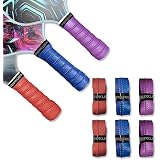
An overgrip is a thin, adhesive strip wrapped over the existing base grip, allowing for a personalized handle feel tailored to a player’s specific needs. They come in various textures and materials, each designed to address different player requirements:
- Tourna Grip (Original XL): This very dry overgrip is exceptionally popular among players with profusely sweaty hands. Upon contact with moisture, it transforms into a chamois-like texture, becoming significantly grippier. It is ideal for maintaining a secure hold in humid conditions or during intense, long matches.
- Wilson Pro Overgrip: Considered a versatile “hybrid” option, the Wilson Pro Overgrip offers a balance of tackiness and a slightly dry feel. It provides excellent grip for most players who experience average levels of hand moisture. Its comfortable feel makes it a popular choice across all skill levels.
- Tourna Mega Tac: For players seeking the absolute stickiest grip possible, Mega Tac stands out. It provides an almost “glued” sensation, catering to those with very dry hands who prioritize an extremely secure hold above all else. Its distinct tackiness, however, can be an acquired taste.
Beyond comfort and moisture management, overgrips also serve as a protective layer for the more expensive base grip. Since overgrips are typically sold in multi-packs (e.g., three for about $10) and are easier to replace than a single $12-15 replacement grip, they offer a cost-effective way to maintain a fresh grip. Replacing an overgrip every 10 to 15 playing sessions, or more frequently if a player sweats excessively, ensures consistent performance and extends the life of the underlying base grip. This simple form of pickleball paddle customization makes a significant difference in player comfort and control.
4. Precision Tuning with Lead Tape for Performance Enhancement
One of the more advanced and impactful forms of pickleball paddle customization involves the strategic application of lead tape. While exciting, it must be approached thoughtfully, as its purpose is to refine a paddle’s existing characteristics, not to miraculously transform a player’s skill level. Lead tape, in essence, alters a paddle’s static weight, balance, and most importantly, its swing weight, thereby influencing power, spin, and sweet spot characteristics.
It is worth noting that lead is a toxic substance. When working with lead tape, proper precautions should always be taken. This includes washing hands thoroughly after handling and, as recommended in the video, covering the applied lead tape with head protection tape to prevent direct contact during play. This ensures safety while still benefiting from the customization.
4.1. Boosting Power and Spin: The 12 O’clock Position
Applying lead tape at the top of the paddle, commonly referred to as the “12 o’clock position,” is primarily done to increase swing weight and, consequently, boost power and spin. This adjustment is particularly beneficial for players seeking more pop on their drives or added bite on their topspin shots.
When weight is added to the paddle’s head, the paddle’s moment of inertia is increased. This means that more energy is transferred to the ball upon impact, enhancing both power and the ability to generate spin. Think of the concept of “Force = Mass x Acceleration”: by increasing the effective mass behind the ball at impact (through increased swing weight), more force can be generated, assuming swing speed remains constant. However, players should start with small amounts (e.g., 1/2-inch strips) and gradually add more, as excessive weight at the top can make the paddle feel head-heavy and reduce maneuverability, potentially slowing down reaction times at the net.
4.2. Expanding the Sweet Spot and Enhancing Stability: The 3 & 9 O’clock Positions
For players who find their paddle too unforgiving on off-center hits, or who desire greater stability against powerful opponents, adding lead tape to the sides of the paddle at the “3 and 9 o’clock positions” can be transformative. This placement effectively broadens the paddle’s sweet spot and improves its overall stability.
When weight is distributed evenly on both sides of the paddle, the sweet spot is moved outwards, making off-center shots feel more consistent and less jarring. This symmetrical weighting also helps to resist twisting upon impact, particularly useful when blocking or returning hard-hit shots. The paddle is made to feel softer and more controlled, providing a more predictable response across a wider area of the paddle face. As with any lead tape application, balance is key; matching the amount of tape on both sides is crucial to maintain an even feel and prevent unintended changes in paddle behavior.
4.3. Adding Softness and Control to Thermoformed Paddles
Recent advancements in paddle technology, such as thermoforming, have led to paddles with inherently higher power and spin capabilities. However, a common trade-off can be a slightly harsher feel or reduced control in the soft game. Applying lead tape to the lower sides or throat area of these paddles can introduce an element of “softness” that might otherwise be lacking.
By adding mass to these specific areas, the overall stiffness of the paddle can be subtly dampened. This allows for greater absorption of impact forces, resulting in improved feel and touch for dinks, volleys, and drops. While it may not fully replicate the plush feel of traditionally molded thick paddles, this customization can significantly enhance the playability of thermoformed paddles for players who prioritize control and a softer touch without sacrificing their power potential.
5. Precision Paddle Matching for Elite Performance
As the competitive pickleball scene continues to evolve, advanced players are increasingly recognizing the need for multiple paddles that feel and perform identically. Manufacturing tolerances mean that even two paddles of the exact same model can have slight variations in static weight, balance, and swing weight. This inconsistency can be detrimental during high-stakes matches when a player needs to switch paddles due to fatigue, damage, or a change in playability.
This challenge is overcome through precise paddle matching, a highly technical form of pickleball paddle customization that requires specialized diagnostic equipment. Machines like the Wilson Baiado 2 Pro are capable of measuring the exact specifications of each paddle and then providing precise guidance on where to apply lead tape to bring them into perfect alignment. This eliminates the guesswork and trial-and-error method, ensuring that a player’s backup paddle feels exactly like their primary, offering seamless transitions during a match.
For players utilizing matched paddles, a key strategy is to rotate them consistently, perhaps switching paddles every hour of play. This practice ensures that all paddles wear out evenly, preventing significant differences in feel and performance from developing over time. An evenly worn set of paddles will minimize any “shock” or adjustment period when a switch is made, allowing players to maintain their focus and competitive edge throughout a tournament or intense session.
Serving Up Answers: Your Pickleball Paddle Customization Q&A
What is pickleball paddle customization?
Pickleball paddle customization means making small adjustments to your paddle to improve its performance and comfort. It helps tailor your equipment to your unique playing style and needs.
Why should I protect my pickleball paddle?
Protecting your paddle, especially its edges, helps extend its lifespan by guarding against accidental scrapes and impacts with the ground. This keeps your paddle in good condition for longer.
How can an overgrip help my pickleball game?
An overgrip is a thin tape wrapped around your paddle handle to improve comfort, absorb sweat, and enhance your hold. It also serves as a protective layer for the more expensive original grip.
Can I make my paddle spin the ball better again if it’s worn out?
Yes, you can use a specialized tool like the CRBN Eraser to gently clean the paddle face. This removes trapped residue from the ball, helping to restore the original gritty texture and improve spin.