Have you ever wondered how top pickleball players seem to generate effortless power and superior control with their paddles? The secret, it turns out, often involves subtle but effective modifications to their equipment. As the video above demonstrates, a common technique employed by even the world’s number one pickleball and tennis players is the strategic application of lead tape.
This simple yet impactful method of customizing your pickleball paddle with lead tape can significantly enhance your game. While the video introduces one of the most fundamental placements, there is much more to understand about how this small addition can transform your paddle’s performance, offering benefits like an expanded sweet spot and increased power without drastically sacrificing hand speed.
Unlocking Your Paddle’s Potential: Why Lead Tape Matters
The concept of adding weight to a sports racket or paddle is not new; it has been a staple in tennis and golf for decades. When it comes to pickleball, the principles are quite similar. A primary goal is often to manipulate the paddle’s balance and overall weight to suit a player’s style, which makes pickleball paddle lead tape an invaluable tool.
Adding lead tape to your paddle effectively changes its physical properties, which in turn impacts how the paddle interacts with the ball. A small amount of strategically placed weight can make a noticeable difference in power, control, and even the feel of the paddle. For instance, the added mass can increase the momentum behind your swings, translating into more forceful shots.
The Science Behind a Bigger Sweet Spot
Many players desire a larger sweet spot on their paddle, and lead tape is often used to achieve this very outcome. The sweet spot is the area on the paddle face where the ball receives maximum energy transfer and minimal vibration upon impact. Striking the ball within this zone results in cleaner, more powerful, and more controlled shots.
When lead tape is added to the perimeter of the paddle, particularly towards the top corners as highlighted in the video, the paddle’s “moment of inertia” is increased. This refers to the paddle’s resistance to rotation. A higher moment of inertia means the paddle is less likely to twist in your hand upon off-center hits. Consequently, shots hit slightly away from the center of the paddle can still feel solid and powerful, effectively enlarging the playable sweet spot and forgiving minor errors.
Generating More Power with Paddle Customization
Beyond the sweet spot, an increase in raw power is another significant advantage of adding weight to your pickleball paddle. A heavier paddle, when swung at the same speed as a lighter one, carries more kinetic energy. This increased energy is then transferred to the pickleball upon contact, resulting in a faster, deeper, and more formidable shot.
However, an important consideration is the balance between power and maneuverability. While more weight generally means more power, it can also potentially slow down your hand speed. The specific placement of lead tape, such as at the top corners, is often chosen because it offers a good balance, providing an increase in power and sweet spot size without excessively hindering quick volleys or defensive blocks.
Strategic Lead Tape Placement: Beyond the Top Corners
As the video explains, placing lead tape at the “here and here” spots, referring to the top corners of the paddle, is a common starting point. This particular placement is favored because it is designed to extend the sweet spot and boost power without significantly compromising the paddle’s overall hand speed. This balance is crucial for players who need quick reactions at the net.
Despite the effectiveness of this introductory placement, there are other areas where lead tape can be applied, each yielding different results for your customized pickleball paddle. Understanding these options allows for a more refined approach to tuning your paddle to your exact playing style. For instance, some players might prefer a head-heavy feel for more driving power, while others might opt for a lighter head to enhance quickness and touch shots.
Exploring Other Common Placements
While the top corners are excellent for beginners, more advanced players might experiment with different distributions:
-
3 & 9 O’Clock Positions (Sides of the Paddle Face): Adding weight here can further increase the sweet spot and stability. This creates an even larger moment of inertia, making the paddle highly resistant to twisting on off-center hits. It’s especially beneficial for players who frequently find themselves blocking hard shots or needing extra stability on defensive volleys.
-
Throat/Bottom of the Paddle Face: Weight added to this area, closer to the handle, can help make the paddle feel more “head-light.” This can increase maneuverability and swing speed, which is advantageous for quick exchanges at the net or for players who rely on wrist action for spin and touch. It contrasts with the head-heavy feel and offers a different kind of control.
-
Under the Grip/Butt Cap: Placing lead tape here significantly increases the overall static weight of the paddle without moving the balance point too far forward. This can reduce vibration, enhance stability during powerful groundstrokes, and offer a more solid feel. It’s often used by players seeking to add mass without making the paddle feel head-heavy.
Each placement affects the paddle’s balance point and overall weight differently. Experimentation is key to discovering what works best for your personal game. What suits a power player might not be ideal for a finesse player, and vice versa. It is recommended to make small changes incrementally and test the paddle on the court.
Applying Lead Tape to Your Pickleball Paddle
Applying lead tape is a straightforward process, but precision and patience are important. Here’s a basic guide to get started:
-
Clean the Surface: Ensure the edges of your paddle are clean and free of dirt or oils. A clean surface helps the adhesive stick properly.
-
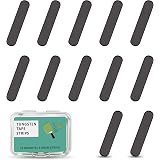
Measure and Cut: Lead tape typically comes in rolls. Measure the length you need for your desired placement. A small section, perhaps 2-4 inches, is usually a good starting point for the top corners.
-
Apply Carefully: Peel off the backing and carefully press the tape onto the edge of your paddle. Smooth out any air bubbles to ensure a secure bond.
-
Cover with Edge Guard (Optional but Recommended): For durability and to prevent the lead tape from peeling off during play, it is often advisable to cover it with a protective edge guard or electrical tape. This also helps to give your customized pickleball paddle a clean, finished look.
Always start with a minimal amount of lead tape, perhaps 1-2 grams per side, and then test the paddle. Small adjustments can lead to significant changes in feel and performance. It is easier to add more tape than to remove it and start over.
The Ongoing Journey of Paddle Optimization
Customizing your pickleball paddle with lead tape is an evolving process. What feels great one day might need slight adjustments as your game progresses or as you face different opponents. Top players continuously fine-tune their equipment, recognizing that every marginal gain can contribute to a competitive advantage. The ability to tailor your paddle to your exact specifications, whether for more power, an expanded sweet spot, or improved hand speed, is a significant advantage.
Embracing this process allows you to truly make your paddle an extension of yourself on the court. Continued exploration into lead tape applications can further refine your game, providing a consistent edge. As the video alludes, this is just “part one” of understanding how to fully leverage paddle customization, indicating even more advanced techniques for the dedicated player.
Dialing In Your Dink: Your Pickleball Paddle Lead Customization Q&A
What is lead tape for pickleball paddles?
Lead tape is a simple modification that pickleball players use to customize their paddle. It helps enhance your game by adjusting the paddle’s weight and balance.
Why would I want to customize my pickleball paddle with lead tape?
Customizing with lead tape can give you more power in your shots and create a larger ‘sweet spot’ on your paddle. This makes your paddle more forgiving on off-center hits and can improve your overall game.
What is the ‘sweet spot’ on a pickleball paddle?
The sweet spot is the area on your paddle face where the ball receives maximum energy transfer and minimal vibration upon impact. Hitting the ball within this zone results in cleaner, more powerful, and more controlled shots.
Where should a beginner place lead tape on their pickleball paddle?
A common starting point for beginners is to place lead tape on the top corners of your paddle. This helps extend the sweet spot and boost power without significantly slowing down your hand speed.